Tree removal after summer storm damage in Maryland
By • August 25, 2026
Tree Removal After Summer Storm Damage in Maryland: What Property Owners Should Evaluate First
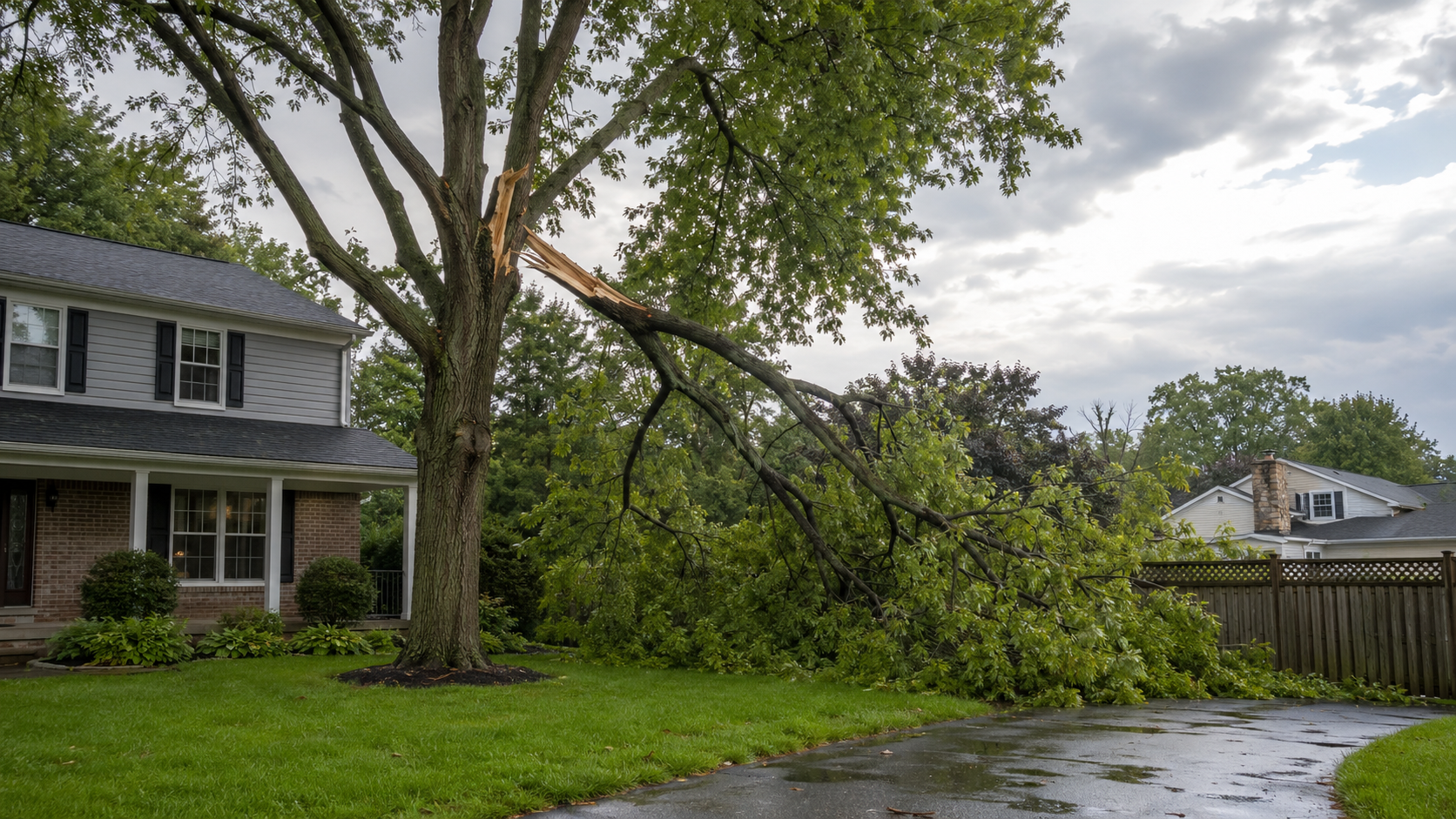
Tree removal after summer storm damage should be considered when a tree is leaning, cracked, uprooted, split, or positioned where it could fall on a home, driveway, sidewalk, fence, or commercial access area. After heavy wind and rain, the safest decision depends on the tree’s location, visible damage, surrounding targets, and whether the tree can remain stable.
In White Marsh, MD and surrounding Maryland communities, summer storms can move quickly through residential neighborhoods, wooded lots, commercial properties, and older landscapes with mature trees. Final Cut Landscape & Tree Care helps property owners evaluate storm-damaged trees with safety, access, and property protection in mind.
Why Storm Damage Requires a Safety-First Evaluation
A storm-damaged tree can look stable from one angle and still be unsafe. Wet soil can loosen roots, heavy limbs can shift after the storm ends, and cracks may not be obvious from the ground. That is why property owners should avoid judging the tree only by whether it is still standing.
Final Cut Landscape & Tree Care looks at the whole situation before recommending tree removal or another service. A tree near an open back corner of a yard may create less urgency than a damaged tree near a roof, driveway, business entrance, or shared sidewalk.
If the tree is already leaning toward a structure, blocking access, or resting on another object, it should be treated as a priority. A professional evaluation can confirm whether tree removal service is needed before the damage becomes harder to control.
Location Matters More Than the Size of the Tree
The size of the tree matters, but location often determines the level of risk. A medium-sized tree near a garage, parking area, or front walkway can be more urgent than a larger tree standing far from daily activity.
In White Marsh and nearby Maryland markets, many properties combine mature trees with tight driveways, fences, sloped yards, and nearby neighboring homes. Commercial properties may also have customer parking, delivery areas, signs, or walkways that need to stay clear after severe weather.
Final Cut Landscape & Tree Care evaluates what the tree could hit if it fails. That includes roofs, vehicles, outdoor equipment, utility areas, patios, and high-traffic paths. This practical view helps determine whether the situation requires removal, trimming, cleanup, or a more urgent storm damage tree service.
Visible Damage Property Owners Should Not Ignore
Some damage is easy to spot, such as a fallen limb or broken top. Other signs are more subtle but can point to serious structural problems.
After a summer storm, property owners should look for:
- New leaning or soil movement around the base.
- Cracks running through the trunk or major limbs.
- Large hanging branches over active areas.
- Split sections where the tree has opened under pressure.
- Exposed roots, lifted turf, or a tree partially pulled from the ground.
These signs do not always mean removal is automatic. However, they do mean the tree should be inspected before people park, walk, work, or gather near it. An arborist or experienced tree professional can help determine whether the tree can be stabilized with tree trimming or whether removal is the safer option.
For a related look at storm risks, see Storm Damaged Trees and Property Safety Concerns Blog Post, which explains why damaged trees can remain dangerous even after the weather clears.
When Trimming May Not Be Enough
Tree trimming can be the right solution when the trunk is stable and the storm damage is limited to smaller limbs. Removing broken branches can improve clearance, reduce weight, and prevent hanging limbs from falling later.
However, trimming does not solve every storm-related issue. If the trunk is split, the root system has shifted, or the tree is leaning toward a structure, branch removal may only reduce part of the risk. In those cases, the problem is structural.
Final Cut Landscape & Tree Care avoids treating every storm-damaged tree the same way. The team considers whether the tree can continue standing safely after damaged limbs are removed. If the answer is no, tree removal may be the better long-term decision.
What Emergency Response May Involve
Some storm situations cannot wait for routine scheduling. Emergency attention may be needed when a tree is blocking a driveway, leaning into a home, resting on a fence, or threatening a public-facing area.
Emergency work usually begins with securing the immediate hazard. That may mean clearing access, removing unstable limbs, or planning controlled removal in sections. The safest approach depends on the tree’s position, the ground condition, and nearby property features.
If the storm damage creates an immediate safety or access issue, Final Cut Landscape & Tree Care can help property owners take the next step through Emergency Tree Service . This is especially important for homes and businesses in White Marsh where access routes, parking areas, and sidewalks need to be restored quickly.
Why Professional Assessment Protects the Property
Storm-damaged trees are unpredictable. A limb may be under tension, a trunk may shift during cutting, or wet ground may limit safe equipment placement. Attempting to cut a damaged tree without proper planning can create more damage than the storm itself.
A professional assessment helps identify the safest order of work. Final Cut Landscape & Tree Care considers equipment access, debris handling, nearby structures, and cleanup before work begins. This is important for both residential and commercial properties where protecting lawns, pavement, fences, and surrounding landscape features matters.
A professional tree service also helps property owners avoid unnecessary removal. If a tree can be safely preserved, trimming may be recommended. If the tree cannot remain safely in place, removal is planned with control and cleanup in mind.
Plan the Next Step Before Damage Gets Worse
After a summer storm, the best time to evaluate a damaged tree is before more wind, rain, or soil movement adds pressure to the problem. Waiting can allow hanging limbs, cracked trunks, or weakened roots to become more dangerous.
Final Cut Landscape & Tree Care provides tree services for White Marsh, MD and surrounding Maryland property owners who need clear guidance after storm damage. The team focuses on safe work, practical recommendations, licensed and insured service, and clean results.
Stay in the know
Sign up to get insights, trends, and more in your inbox.
Contact Us
We will get back to you as soon as possible.
Please try again later.
SHARE THIS