Tree trimming in Bel Air before winter: What should be evaluated this fall?
By • October 22, 2026
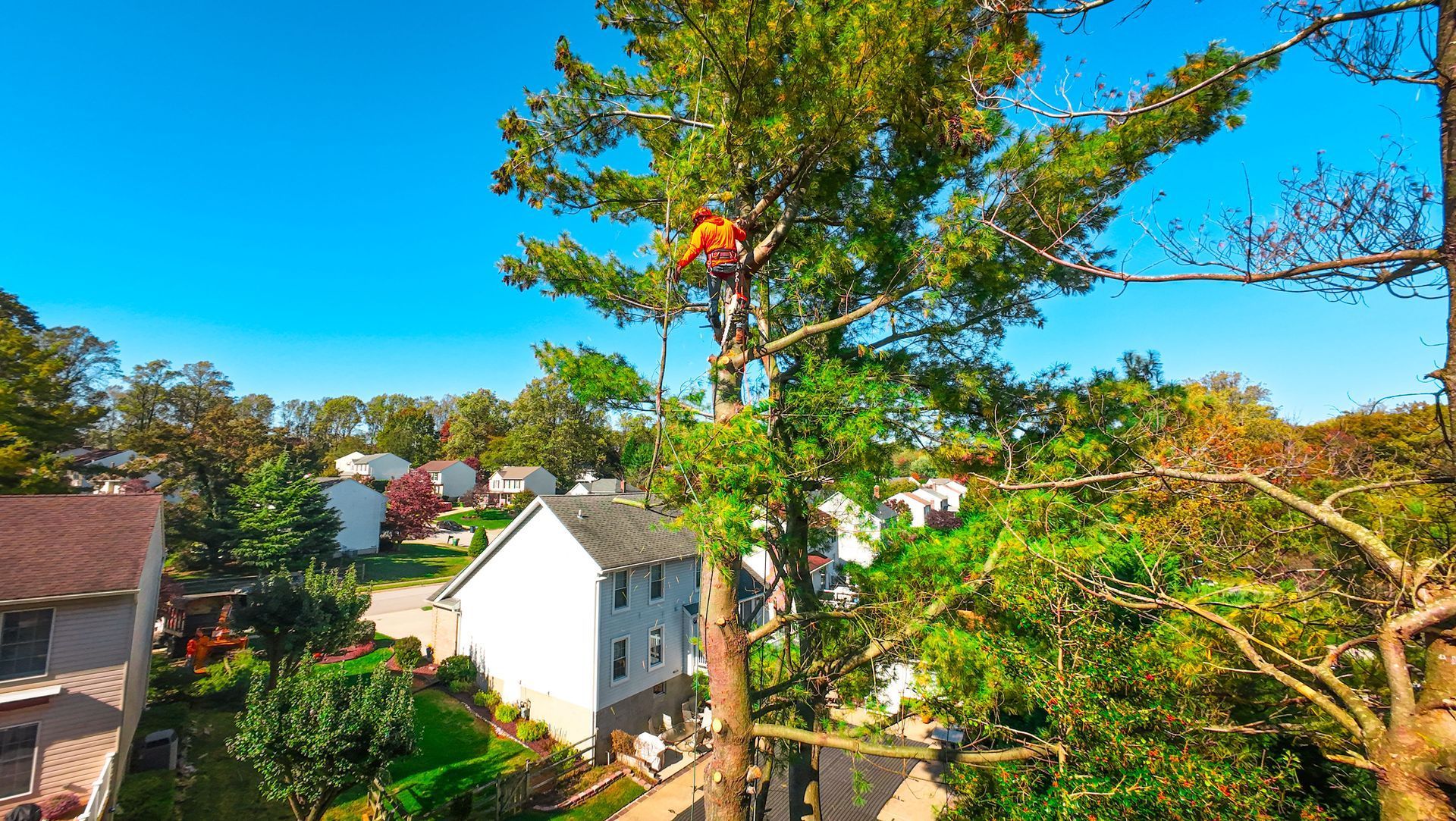
Fall changes how homeowners see their trees. As leaves drop, branch structure becomes easier to observe, overextended limbs become more noticeable and clearance around roofs, driveways and outdoor areas can be evaluated before winter weather arrives.
That does not mean every tree should automatically be trimmed in fall. Tree species, condition, location and project objectives all influence the recommendation. However, an evaluation can identify deadwood, damaged branches, clearance conflicts and structural concerns that should be addressed or monitored.
For homeowners considering tree trimming in Bel Air, MD, the most useful first step is understanding what the crew should evaluate and how those findings shape the proposed work.
Final Cut Landscape & Tree Care evaluates the individual tree, surrounding property and intended result before recommending a trimming scope.
Why evaluate trees before winter?
Winter can expose trees to wind, rain, ice and occasional heavy snow. Branches that are already dead, cracked or poorly attached may be more vulnerable when additional weight or movement is introduced.
A fall evaluation also gives homeowners time to address branches interfering with the home or normal property access. Instead of waiting until a limb falls across a driveway or damages another landscape feature, the property owner can review visible concerns under controlled conditions.
The objective is not to remove as much growth as possible. Effective tree trimming should target defined concerns while respecting the tree’s natural structure.
Start with dead, broken and hanging branches
Deadwood is one of the first conditions to evaluate. A dead branch no longer has living tissue supporting future growth and can eventually separate from the tree.
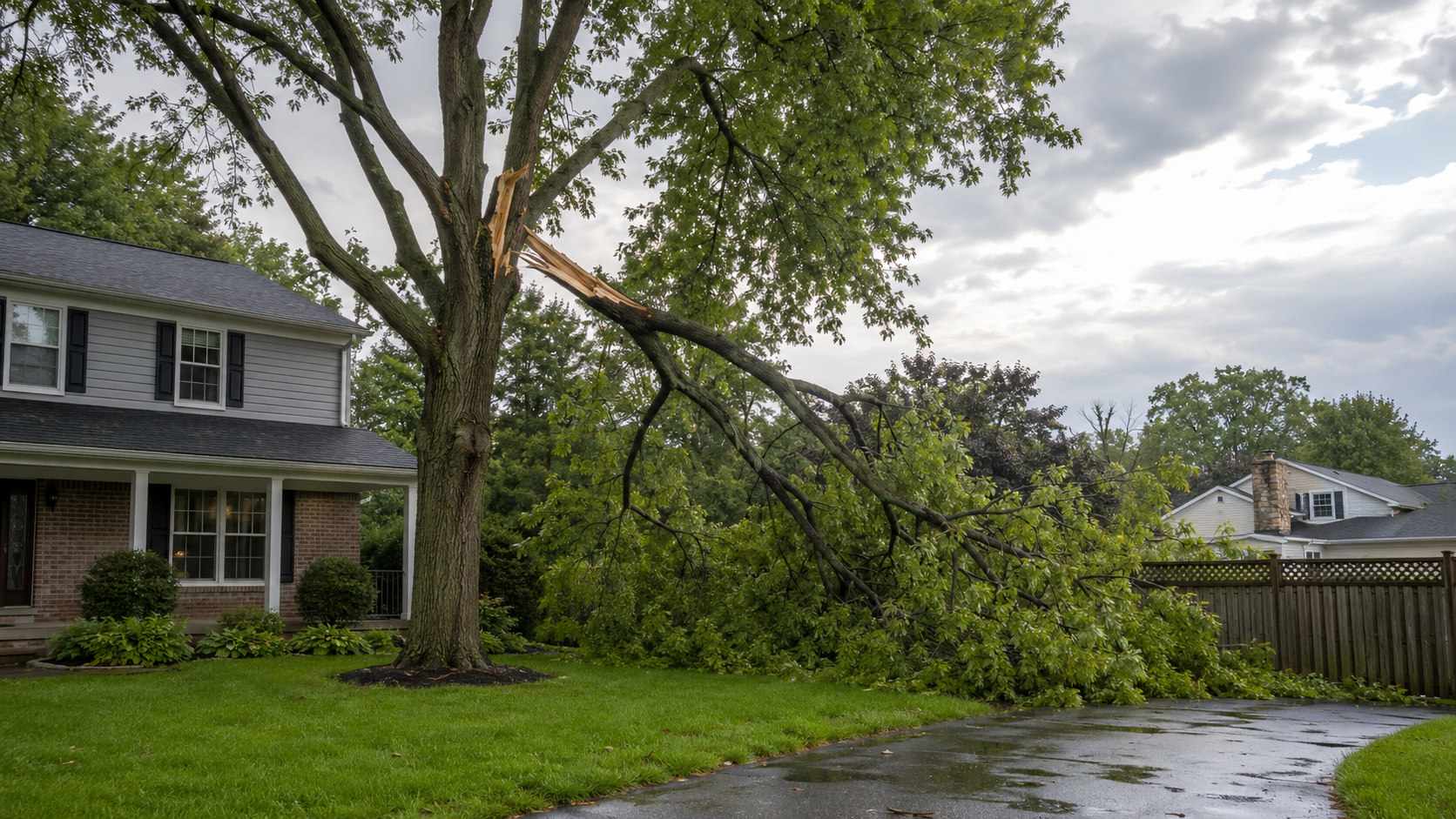
Broken or partially attached limbs may create a more immediate concern, particularly when they hang over a roof, driveway, walkway, play area or frequently used section of the yard.
Signs visible from the ground
Homeowners may notice branches without foliage when nearby limbs remain full, peeling bark, visible cracks or pieces hanging at an unusual angle. Freshly broken limbs can also leave exposed wood where the branch separated.
These observations can help identify where an assessment should begin, but they do not provide a complete diagnosis. Upper-canopy damage and attachment problems can be difficult to evaluate safely from the ground.
Avoid climbing the tree, pulling suspended branches or using a ladder to inspect the canopy. A professional tree service has the equipment and work plan needed to evaluate elevated conditions.
Location changes the level of concern
A dead branch over an unused wooded area presents a different situation from one positioned above a driveway or bedroom.
During the evaluation, we consider both the branch condition and what could be affected if it falls. This helps prioritize the work instead of treating every branch as an identical risk.
Review clearance around the house
Branches do not need to be dead to create a maintenance concern. Healthy growth can extend toward roofing, siding, gutters and windows as the canopy expands.
Repeated contact with the home during windy conditions may damage exterior surfaces. Dense growth close to the roof can also make inspections and routine maintenance more difficult.
The trimming plan should evaluate:
- Branches touching or extending over the roof
- Growth near gutters and exterior walls
- Limbs obstructing windows or exterior lighting
- Branches limiting access for maintenance
- Canopy growth above decks, patios and entry areas
Clearance should be intentional. Excessive pruning can create unnecessary stress and alter the natural balance of the tree.
Homeowners can review examples of completed work in Final Cut’s tree trimming gallery.
Look at branch unions and canopy balance
The point where branches connect can influence how they respond to wind and added weight. Narrow unions, competing leaders and branches growing across one another may require closer evaluation.
Competing stems
Some trees develop two or more dominant stems extending from the same area. Their appearance alone does not determine whether trimming is required, but the connection should be evaluated when the stems are large or positioned near structures.
Removing a major stem is not always the appropriate answer. The recommendation depends on the tree’s age, condition, species and existing structure.
Crossing and rubbing branches
Branches that repeatedly rub can damage bark and create wounds. Selective pruning may reduce contact and improve the organization of the canopy.
The crew should identify which branch can be removed without creating a larger structural or visual problem. Cutting both branches or opening the canopy excessively may not support the intended result.
Uneven canopy growth
A canopy may appear heavier on one side because of sunlight, previous pruning, nearby structures or competition from other trees. The trimming plan should account for that existing balance.
Tree trimming cannot correct every structural condition in one visit. In some cases, conservative work completed over time may be more appropriate than making numerous large cuts at once.
Evaluate branches above driveways and walkways
Bel Air homeowners should pay particular attention to branches above areas used daily.
Low limbs can interfere with vehicles, delivery trucks and pedestrians. Overhanging growth can also reduce visibility near a driveway entrance or create clearance problems around parking areas.
The evaluation should consider how the property is actually used. A branch that clears a passenger car may still interfere with a moving truck, service vehicle or equipment needed elsewhere on the property.
If a driveway, walkway or landscape renovation is planned, mention it during the estimate. The desired future clearance may differ from what the property needs today.
Consider how previous trimming affects the new scope
Trees often retain visible evidence of previous pruning. Old cuts, uneven branch removal and repeated heading cuts can influence how new growth develops.
A tree that was trimmed aggressively may produce dense shoots near earlier cuts. Another tree may have a sparse or uneven canopy because too many interior branches were removed.
Before recommending additional trimming, we evaluate how the tree responded to the previous work. The goal is to avoid repeating cuts that could create more imbalance or remove unnecessary living growth.
Homeowners comparing providers should ask what the proposed trimming is intended to accomplish, not simply how many branches will be removed.
Distinguish tree trimming from tree removal
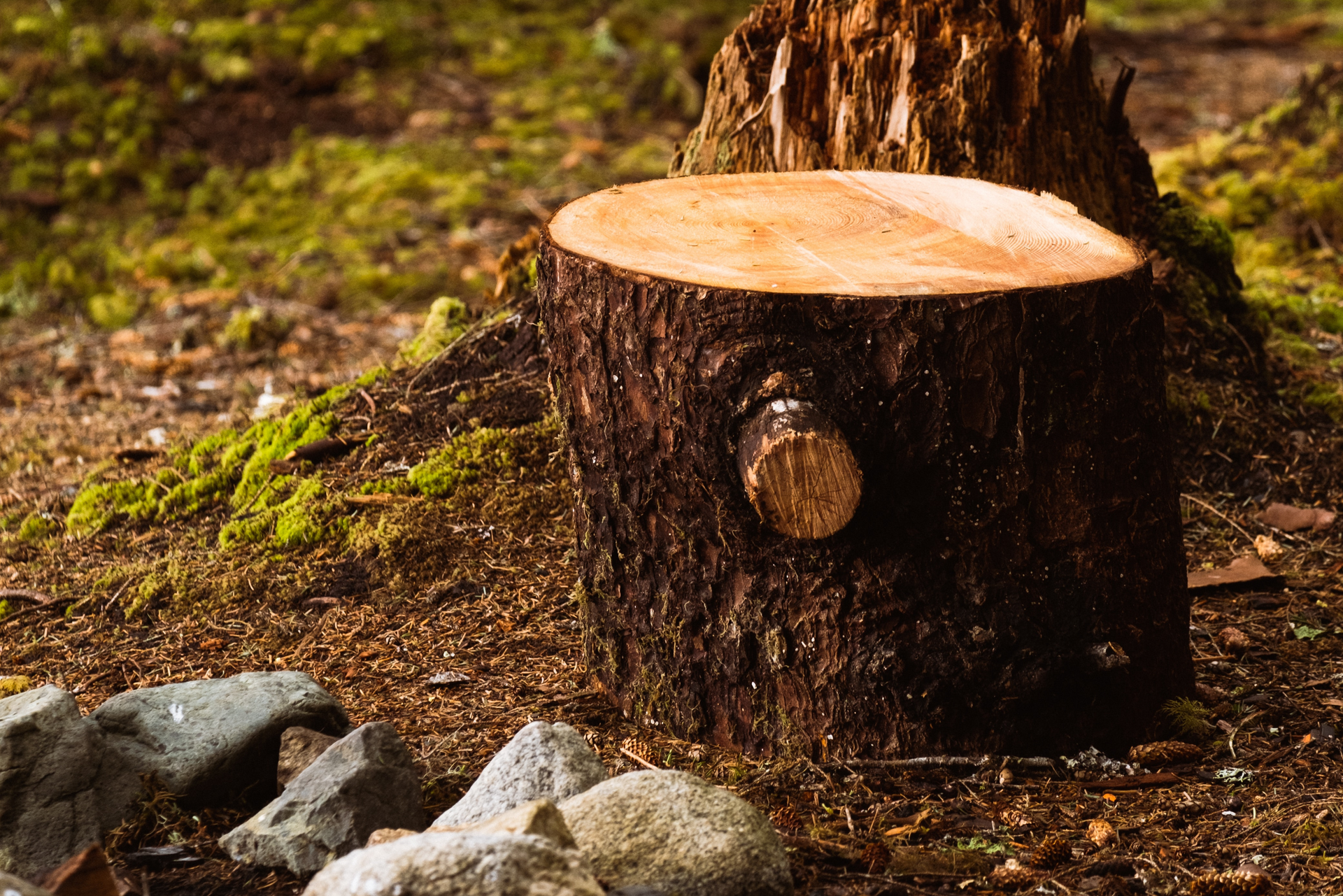
Not every damaged or overgrown tree needs to be removed. Tree trimming may address selected deadwood, improve clearance or reduce conflicts while retaining the tree.
Removal may become the more appropriate recommendation when the entire tree is dead, severely damaged, structurally compromised or creating a condition that selective trimming cannot reasonably resolve.
Final Cut’s guide to tree removal versus tree trimming explains how condition, location and property exposure affect that decision.
If removal is recommended, the contractor should explain why trimming would not adequately address the concern. Homeowners should understand the reason for the recommendation before approving the work.
What should a tree trimming estimate include?
A useful estimate should identify the trees included and describe the objective of the work. General wording such as “trim trees” can create uncertainty if the property contains several trees or the scope has multiple priorities.
The proposal should explain whether the work targets deadwood, structural concerns, clearance, canopy reduction or a combination of objectives. It should also address debris removal and cleanup.
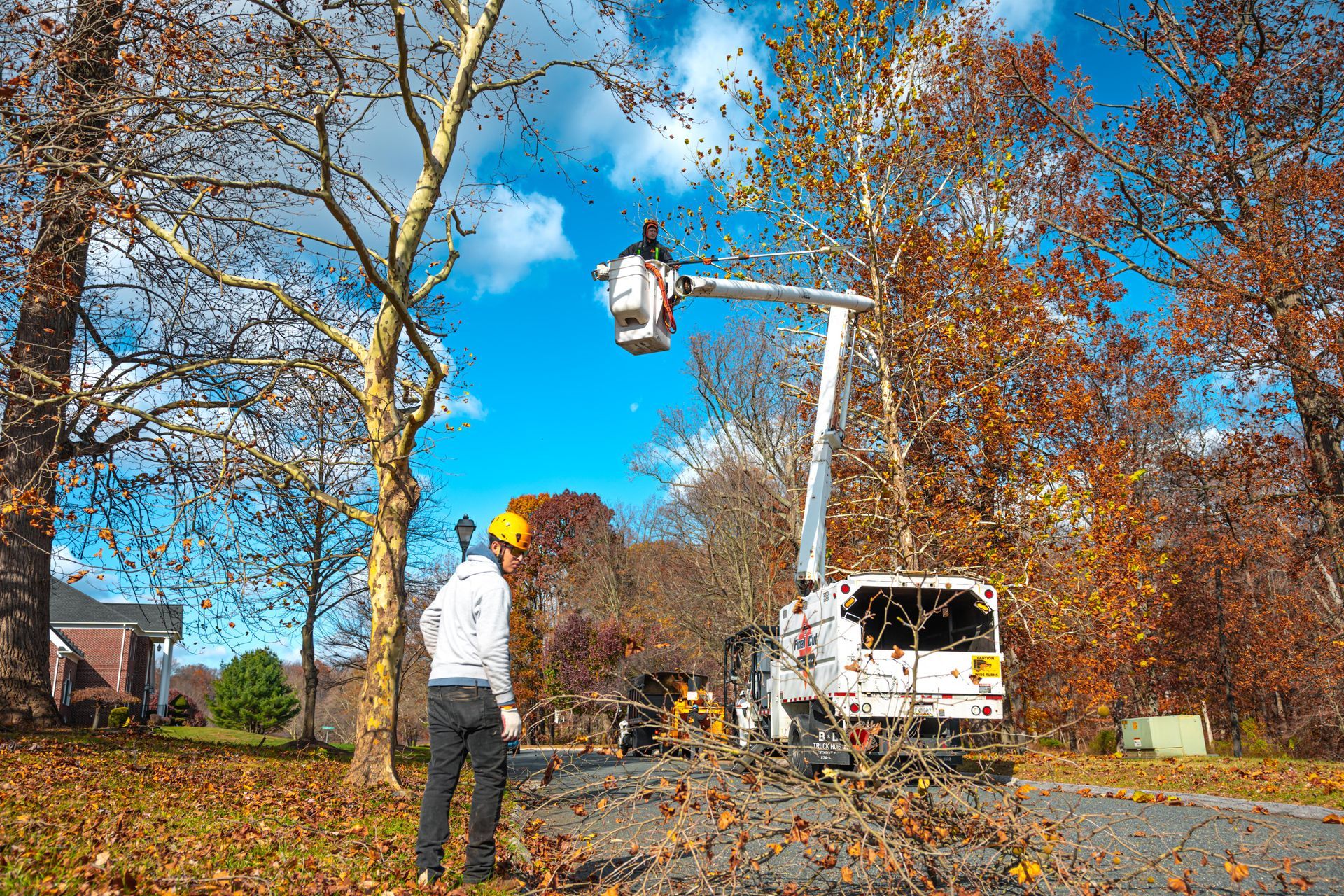
Equipment access can affect the scope. Fences, narrow side yards, sloped ground, landscaping and nearby structures may influence whether the crew uses climbing equipment, an aerial lift or another approach.
The estimate should also establish how additional concerns discovered during the work will be communicated. Homeowners should approve meaningful scope changes before extra work proceeds.
Concerned about dead branches, roof clearance or winter exposure on your Bel Air property?
Request a tree trimming estimate from Final Cut Landscape & Tree Care to have the trees, surrounding structures and crew access evaluated.
Prepare the property for tree trimming
Before the scheduled service, move vehicles, patio furniture and portable decorations away from the work area. Confirm that gates are unlocked and that the crew can reach the trees included in the estimate.
Pets and children should remain inside or away from active work zones. If neighboring access could be affected temporarily, communicate with the adjoining property owner before the crew arrives.
Homeowners should also identify irrigation components, landscape lighting or other features that may not be immediately visible beneath fallen leaves or groundcover.
These preparations help the crew establish a safer work area and reduce avoidable delays.
Plan cleanup and the next landscape step
Tree trimming produces branches, wood and smaller debris. The proposal should clarify whether the crew will chip branches, haul material and complete general cleanup.
If trimming is part of a broader property improvement, discuss what will happen next. Increased sunlight may change the conditions in a planting bed or lawn area. Removing low growth may also reveal an older stump, overgrown shrubs or a section of landscape that needs restoration.
Final Cut provides landscaping services for property owners coordinating tree care with seasonal cleanup and other outdoor improvements.
Planning the services together can help prevent landscaping work from being disrupted by later tree equipment or falling debris.
Review the completed work from the ground
After trimming is complete, walk around the property with the project representative.
The tree may not look perfectly symmetrical because natural growth, structural limitations and conservative pruning influence the finished shape. The more important question is whether the agreed concerns were addressed without removing unnecessary growth.
Confirm that specified deadwood and clearance conflicts were handled, the work area was cleaned and any approved changes appear correctly in the final invoice.
Ask whether the tree should be monitored after storms or reassessed during another season. Trees are living structures, and their condition can change as they grow or respond to weather.
Schedule tree trimming in Bel Air with Final Cut
Fall is a practical time to evaluate tree structure, deadwood and property clearance before winter weather limits scheduling or turns a manageable branch concern into an urgent call.
Final Cut Landscape & Tree Care provides professional tree trimming and related landscaping and tree services in Bel Air. We evaluate the tree, surrounding property and intended outcome before defining the work.
Request an estimate from Final Cut to discuss tree trimming for your Bel Air property.
Related tree care and landscaping resources
- Tree removal and tree trimming in Bel Air, MD
- Tree trimming services
- Bel Air landscaping and tree services
- Tree removal versus tree trimming in Maryland
- Tree trimming project gallery
Stay in the know
Sign up to get insights, trends, and more in your inbox.
Contact Us
We will get back to you as soon as possible.
Please try again later.
SHARE THIS